Menu

TotalWeb Partners Blog

Insights on Social Media Marketing: Scoop the Best for B2B Marketing 

Did you know that 71% of consumers who have had a good social media service experience with a brand are likely to recommend it to others?

Not long ago, businesses would focus on newspapers and advertising through print. They still do, but clearly, digital media has taken over a major share of the branding budget in 2018. Now with smartphones and social media technology, businesses prefer to surf the tide of customer service using new-age marketing technologies. Social Media Marketing clearly demonstrates how technology amplifies brand messaging and meets new benchmarks in customer service benchmarks.

B2B marketing insights incorporated in social media are effective methods for traffic generation, interactive engagement and brand association.

  • IBM Watson worked with the US open to deliver real-time insights on Instagram of new engagements and experiences for millions of online fans. Customers form associations with the event and the brand, thus being an effective real-time marketing scenario.
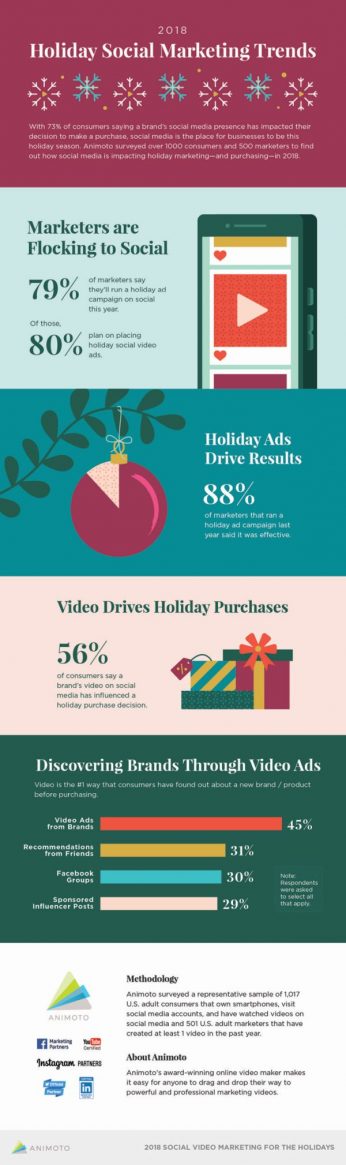
  • A video is often named as the tool which has helped gain traffic in various areas of businesses. In the area of video marketing for B2B marketing efforts, 97% of marketers believe that videos have helped increase user understanding of a certain product/service.
  • Real-time responsiveness plays a critical role in customer experience. A great example of this is the Facebook page of Bluehost. Bluehost is one of the leading web hosting services company and boasts of a strong social media presence. The unrelenting efforts of their social media team provide opportunities to the brand in coordinating with their audience on real-time concepts.

Read more: Insights on Social Media Marketing: Scoop the Best for B2B Marketing 

How to Solve 3 Major Social Media Marketing Pain-Points That Continue to Exist

Social media marketing has immense potential in the areas of customer engagement, lead generation and sales. Using social networks, you can not only identify new customers, but also engage your current customers and expand their customer lifecycles. Yet, few social media marketers ever boast of having experienced these benefits. Why? Pain-points. Here are 3 major pain-points that you probably continue to experience and how to fix them permanently.

  1. Securing resources and time

According to an eMarketer survey, 46% enterprise companies find securing internal resources extremely challenging. That’s not very surprising. When was the last time you asked your boss to hire an extra hand for social media marketing? If it wasn’t too long ago, you’ll remember the sting of being turned down after ineffectively sharing your workload issues. Everyone assumes that social media managers simply tweet. Why should any company need more than one of those employees?

Solution

The simplest solution to this problem? Subscribe to a reliable social media management tool. Choose one that automates/organizes your most time-consuming tasks, so you can make room for tasks that actually contribute to your goals. Here are a few great examples of tools.

DrumUp for social media and content marketing

Using DrumUp, which a social media manager tool, you can schedule social media posts in advance, store drafts/completed ideas in organized folders, schedule across multiple accounts, curate content that your audience will appreciate, automate content sharing from RSS feeds (of your blog or interesting websites) and automate content sharing from libraries or pre-filled folders of your best evergreen content.

Canva for easy social media graphic designing

Using Canva, which is a graph designing tool, you can choose from optimized templates for sharing graphics on different social platforms. The tool also stocks templates for infographics, blog graphics, and so many other purposes, so you design-time is significantly reduced. If you have standard colors and fonts for your brand, you can also save your work on Canva and reuse the same templates to create quick social media graphics.

Read more at https://www.business2community.com/marketing/how-to-solve-3-major-social-media-marketing-pain-points-that-continue-to-exist-02079682

Read more: How to Solve 3 Major Social Media Marketing Pain-Points That Continue to Exist

4 Reasons Why Effective Writing Must Figure in Your Web Design Strategy

Digitization has caught up with us and is taking root in all parts of our lives. From businesses to individuals, all strive to carve their niche in our digital world. Both newbie web designers and some of the experienced hands who have been in the industry for decades still believe that a successful website is all about the visuals. To some degree that is true; designing aesthetics and visuals are of great importance, but another aspect that should be recognized is compelling writing.

The textual content that you write is just as significant as the images that you will use and below are the reasons why.

  1. Writing Grabs Attention

Forget the website for a minute, what do you do when you want to grab someone’s attention? You will probably shout or even scream to achieve this.

The same concept applies in the online space. So how exactly can you grab attention online through your website? Images can work magic, but they are not enough as attention-grabbing tools by themselves. It’s the content that helps your visuals attract and hold the attention of web visitors.

By using engaging content, you will be able to make a point in a precise manner effectively. You can create an element of surprise with your content, use it to shock your audience or use it to engage and pique the interest of your audience. But even as you are about to put down your words into writing, you should know that the content that you come up with must be written impeccably to grab attention.

2. Writing Helps You Demonstrate Credibility

Different kinds of sites have different expectations, but they all have a common requirement. They all have to look credible. It’s a logical requirement if you are using your website as a tool to help you sell something, promote a cause or indulge people in doing specific activities. The bottom line is, you need them to trust you and to achieve that, your website must look reliable.

The good news is it’s not rocket science to create a robust website that looks serious. Just like mentioned above, having the right visual elements and arranging them nicely is not enough to cut it. Your site still won’t appear complete and will require a cherry on top which is the added text. With good writing, not only will your website engage audiences, but it will also make your site weblink appear credible.

You can also subtly achieve this. It is unnecessary to write about the high quality of your products or brag about your high level of honesty. On the contrary, such statements could potentially have the opposite effect on your audience. When it comes to reputations of companies, it’s best when it speaks for itself.

Read more: 4 Reasons Why Effective Writing Must Figure in Your Web Design Strategy

8 RULING WEB DESIGN TRENDS FOR 2018

Web design trends have undergone an apparent change as one of the most dynamic industries in web technologies. It is 2018, the eighteenth year of the millennia, a year for exploration of the web technologies in a dynamic perspective. Web technology is unbeatable and with the ever-rising technical challenges as more products get into the market, the only choice of web designers is be innovative and put up with the changing trends. They have to ensure that their designs fit any internet device be it a desktop or a smartphone. Here is a list of 8 ruling web design trends that will shape the web industry in 2018.

Prioritizing mobile web designs

Smartphones have surpassed desktop and notebook computers in browsing. According to Statista, a renowned scientific research organization, projections hold that by 2020 over 40 percent of the population of the world will own a smartphone. Interesting facts by the same organization project an annual smartphone shipping capacity of 1.7 billion by 2021. The implication is that most people will surf the net using smartphones. 2018 resolution is to give priority to mobile web designs. This year, 2018, is a year of transformative web design as designers embrace the reality of battling with technical challenges to give their users a satisfying experience in their web products with a top priority on mobile designs. Have a look on 7 essential principles of mobile web design to get designed a good mobile site.

Read more: 8 RULING WEB DESIGN TRENDS FOR 2018

SaaS Cloud–It’s What’s For Dinner

The world over, folks ask the same two questions every day–what’s for dinner, and what’s the weather forecast? In the government IT space, every day we’re all asking about the cloud forecast. A recent report from P&S Market Research provides new insights on the global government’s cloud appetites.

Big and Getting Bigger Fast

According to the report, the global market for government cloud services is expected to reach $49.2 billion by 2023, growing at a compounded annual rate of 15.4 percent. It states that SaaS offerings will see the highest revenue growth because government agencies are attracted by the low cost of ownership and the pay-as-you-go model.

What Tastes Good?

Government agencies have been adopting cloud for storage, disaster recovery, identity access management (IAM), risk compliance management, and other applications. The P&S report projects that the largest growth in the next five years will take place in disaster recovery and IAM applications as agencies turn to cloud solutions to prevent transaction and data losses from disasters and vulnerabilities.

FedRAMP Breadcrumbs

Software-as-a-Service (SaaS) solutions have figured prominently as agencies have turned to a variety of subscription-based cloud offerings for customer relationship management, financial management, and human resource functions. Judging by the 60 cloud services currently going through FedRAMP security accreditation, the trend toward SaaS solutions is likely to continue–90 percent of these are SaaS solutions. And to date, about 80 percent of the 97 services that have received FedRAMP authorization are also SaaS solutions.

Agency Appetites

Recent agency requests for information give a view into what agencies are looking for in cloud infrastructures. For instance, the FBI is looking to acquire Platform as a Service (PaaS) and SaaS offerings from established cloud service providers with an existing, large-scale commercial offering that can provide resource pooling to support multiple government agencies. The cloud platform must meet intelligence community security requirements for handling secret data, assuring high availability, and providing significantly more cost-efficient computing than traditional approaches. The FBI is also looking for services that provide middleware, such as identity and security management, log analysis, and audit capabilities.

The U.S. Customs and Border Protection (CBP) is also looking to migrate applications to a commercial cloud provider. CBP wants to migrate all its applications out of its National Data Center in Springfield, Virginia to the cloud by the end of October 2022. CBP’s objective is to procure FedRAMP-compliant services to migrate to the cloud service provider’s platform. The agency is looking for Infrastructure-as-a-Service, PaaS, and SaaS cloud providers.

DoD’s JEDI infrastructure cloud deal’s headlining the cloud menu–but look out for SaaS solutions to keep tickling Uncle Sam’s taste buds.

Read More

Why Non-IT Employees Are Now Driving Decisions About SaaS And Cloud Applications

Ryan Duguid, SVP of technology strategy at Nintex, spoke with TechRepublic’s Dan Patterson about the role of non-IT employees in cloud transitions.

Watch the video or read the transcript of their conversation below:

Patterson: The cloud has had an undeniably transformative effect on the enterprise and SaaS, of course, is at the heart of cloud growth. Now, the growth of SaaS might be up to non-IT workers.

Ryan, thank you very much for your time today. I wonder if we could first define how SaaS has grown historically to this point, and then we’ll talk a little bit about why it’s up to non-IT employees to help the growth of the cloud, and cloud-based applications.

 Duguid: Certainly, so at the end of the day, the massive upswing in SaaS is driven for obvious reasons, right? There’s cost savings associated with it, a lack of requirement for as many IT administrators to keep the lights on, but fundamentally, I think it’s about speed of delivery of technology to the business, and that’s always been a problem in the IT sector, and SaaS really makes the promise to solve that problem.

Patterson: So what is it about SaaS that has either reached an apex, or what is it that is now demanding non-IT employees to buy in as well?

Duguid: I think there’s two parts to this, right? The first part is that at the end of the day, SaaS has largely been driven by demand from the business. IT historically has struggled to keep up with the requirements of the business, and so the business is constantly pushing for the latest and greatest technology.

I think the other side of it, is now there’s a proliferation of SaaS vendors out there, when in the early days it was the big boys like the Workdays, and Salesforce and the likes. There’s not a SaaS application for everything, for every business function, for every industry, no matter how large or small, and so as a result there’s really this thirst or appetite for the business to get in and self-serve, even if IT’s not willing to be a part of that journey.

SaaS Adoption Is Outpacing Business’s Ability To Secure It

Two-thirds of ITDMs at large organisations are concerned about keeping up with security requirements for SaaS adoption

As the rate of cloud and SaaS adoption increases in businesses, IT teams are primarily concerned with data privacy, new research contends, with 64% of ITDMs believing that their organisation’s SaaS adoption is outpacing their ability to secure it.

But nearly half agree that their organisation is hesitant to adopt SaaS-based security solutions, according to a survey of 200 ITDMs by cyber security firm iboss for its 2018 Enterprise Cloud Trends Survey Report.

In the early days of SaaS, security was one of the primary concerns limiting adoption because the SaaS delivery model was relatively new, and companies felt uncomfortable storing sensitive data outside their own security measures.

Although the SaaS model has matured and has so far proved to be highly stable and secure when compared to on-premises solutions, it is easy to understand why there are still outstanding concerns around it.

Three-quarters of ITDMs told iboss that their organisation’s data was more secure using on-premises, purpose-built appliances rather than a SaaS solution. The most likely reason for this is because they feel that their data is less secure when using a SaaS solution, because such solutions store their data on shared servers – a reason 66% of respondents agreed with. A quarter also thought that security wasn’t a priority for SaaS solution providers.

“While these concerns aren’t unfounded, they also aren’t completely legitimate,” argued iboss CEO Paul Martini, analysing the findings of the report. “There are an array of cloud types and delivery models that both laymen and tech pros aren’t aware of that address many of the top concerns found in the survey head-on.”

Of course, there are many vendors who are committed to security, and to keeping their clients’ data safe, with incoming GDPR data protection rules meaning that they could be held partially responsible for any breaches.  Part of the solution is being diligent when choosing an SaaS provider, especially if they will be processing personally identifiable information or financial data.

A good vendor will be transparent in their security practices and be able to demonstrate multiple layers of security to protect customer data. This can include physical site security of the data centre facility, as well as application and database security, where defenses are core to the software development process.

Read More

Meeting Bonus Program

Receive 2 hours of free website service just for meeting with one of TotalWeb Partners’s representatives, no commitment and no obligation.

We are so confident that you will find value in our web services, TotalWeb Partners will provide you with 2 hours of free website update maintenance, to be used any way you would like.

All we ask is that you meet with one of our representatives and learn about our services.  Our rep will provide you with a certificate for 2 free hours of maintenance on your existing site.

This maintenance can include any of the following:

  • Modify text
  • Modify navigation
  • Update images
  • Add Images
  • Add new products to existing product lines in a catalog
  • Replace outdated product or contact information
  • Update contact or RFQ forms

Once you have received your certificate please feel free to contact us.

Addressing IT Decision Makers’ Concerns About Software As A Service

For a long time, IT departments have had concerns about Software as a Service; the resistance can be traced to concerns about reliability and security, integration, customization, accessibility and job security. Find out how to best respond to the concerns

Service provider takeaway: SaaS-based products face an uphill battle in most IT departments. Service providers should take IT’s concerns about Software as a Service seriously and be prepared with answers that will smooth the path to SaaS sales.

In a recent story, I outlined how Software as a Service (SaaS) is changing the software sales process, giving more power to the business decision maker. But, of course, IT still has tremendous influence over software sales, and if you want to sell SaaS-based tools to IT departments, you’ll need to know how to best approach them.

As you know, IT departments have historically had concerns about Software as a Service (SaaS) systems, and that resistance has been a fundamental roadblock to SaaS sales. In order to sell SaaS-based systems to your customers, you’ll need to pay attention to their objections and be able to address them with solid advice. And, exposing your customers to a new generation of SaaS solutions specifically aimed at IT professionals could be what convinces them that SaaS is viable for their entire enterprise.

Resistance to SaaS

IT department resistance to SaaS has stemmed from a number of concerns, both valid ones and debatable ones. Among the valid reasons for IT departments to question SaaS is its reliability and security. They also are right to ask how a SaaS-based product will integrate with existing applications and databases or how it can be customized to meet a company’s needs. And they have a legitimate reason to be concerned about where their company’s data will reside and how they can ensure access to that data if their company decides to discontinue their SaaS subscription.

On the debatable side of the equation, many IT professionals simply refuse to consider SaaS products because they believe they cannot match the functionality of traditional, on-premise applications. Others are concerned that SaaS tools will alleviate the complexities of software deployment and day-to-day management to such an extent that they could threaten the IT staff’s job security.

Smart service providers will anticipate all of these potential concerns about SaaS and either proactively address them or be prepared to respond to them.

Addressing concerns about Software as a Service

If you take the proactive route, a good first step is to educate your customers’ IT staff about the potential IT and business benefits and real technical requirements of SaaS solutions. Carefully evaluate the functional capabilities of the SaaS offerings up for consideration to clearly understand how they compare with traditional on-premise applications. While some SaaS offerings may offer fewer opportunities to customize the applications, these shortcomings may be offset by quicker deployment capabilities and greater ease of use for multiple users, which brings greater productivity. Educating your customers on these tradeoffs is important.

To address concerns about job security, you should help the IT department identify how they can redirect the IT resources that will be freed up by Software as a Service from mundane daily tasks toward more strategic and valuable activities.

To address IT’s concerns about reliability and security, it’s important to ascertain that the SaaS vendor you recommend has provisions for SAS (Statement on Auditing Standards) 70 certification. This certification verifies that the SaaS vendor, or its hosting company, has implemented the right technology and business processes to ensure the reliability and security of its hosted applications.

It is also essential that you clearly understand where your customer’s data will be located, the security parameters that have been established to safeguard the data, and the policies that are in place to ensure that they have full accessibility to the data, especially if the SaaS vendor goes out of business or decides to discontinue service. In some cases, you might want to negotiate an escrow arrangement for your customers, in which access to the application code is guaranteed in the event that the vendor folds or discontinues a service.

In addition, it’s important that the SaaS vendor you align with designs its solution to permit users to reconfigure their format, workflow and data migration processes to accommodate their business requirements.

And to ensure interoperability with various legacy applications and data sources, make sure that the SaaS vendor you recommend not only architects its on-demand applications to include open application program interfaces (APIs) and Web services, but also leverages third-party integration tools and integration service providers.

Finally, you should work with your SaaS vendors to provide IT departments with detailed service-level agreements (SLAs) that clearly state their performance objectives, problem resolution policies and escalation procedures, as well as penalties for failure to meet these expectations.

Demonstrating the business case for SaaS

Once these concerns have been addressed, you can move on to building the business case for Software as a Service. You should develop total cost of ownership (TCO) and return on investment (ROI) assessment tools that can help the IT department fully understand and appreciate the cost savings and productivity improvements that can be generated from a SaaS-based product. These tools should be designed with the goal of helping your customer better understand the additional hardware, consulting and staff support costs that are associated with deploying traditional, on-premise applications. They should also be able to document and measure SaaS utilization levels.

A new generation of SaaS solutions aimed at helping IT departments better manage their day-to-day operations can serve as an effective proof-point for demonstrating the power of SaaS. These new SaaS solutions include Web-based security, storage, desktop and server management services from companies such as Symantec, EMC, Dell and Cisco Systems. These SaaS solutions are designed to meet the needs of IT departments seeking to automate their management requirements. IT departments that adopt these services will gain a first-hand understanding of the power of SaaS and why it appeals to business users. This first-hand experience will have a significant impact on their role in the overall selection and deployment process and could produce a fundamental shift in the corporate sourcing strategy.

By exposing the IT staff to Software as a Service, addressing their concerns about the delivery model and demonstrating the business benefits, you can serve as a trusted advisor who helps IT departments select, implement and fully leverage SaaS solutions that can enable them to better align their work with their business end users and support the strategic objectives of the organization.

Read More

The New Ultimate Question for Customer Success and SaaS

There seems to be a rigorous debate in the SaaS customer success space about the value of measuring customer satisfaction through various survey methodologies, whether CSAT, NPS or CES (customer effort score). While each of these methodologies have their merits, I believe there’s a better question to ask, maybe the ultimate question every SaaS (or subscription) company should use to best measure customer sentiment.

For a SaaS company, your customers ultimately speak with their feet and their wallet in the form of renewals. If they’re getting value from the solution(s) and experience you deliver, they will continue to purchase your product again, or renew. If they aren’t getting value, they’ll stop paying for your product, or churn. It’s as simple as that.

Can you imagine a world where every single customer success issue could be resolved simply by asking a single question? Unfortunately, no such world exists (at least to our knowledge), but there are certain questions that can make daily life much easier for customer success teams. While simple questions may not solve all of the challenges that accompany customers along their journeys with your company, they can help uncover hidden issues, start important conversations, and accurately gauge customer health and sentiment.

Engage Customers By Asking Pointed Questions

It all comes down to engaging customers to the point they feel comfortable talking and discussing difficult matters with their Customer Success Manager (CSM) or representative. Laying out discussion topics can help identify the opportunities and risks associated with every account. Both open-ended and yes-or-no-questions can be helpful as any answer can help formulate and guide customer success strategy and planning. Customer input and guidance is the number one best way to formulate next steps from both individual customer issues and overarching departmental strategies.

The New Ultimate Customer Success Question

Ready for the question that can help serve as a guide to the entire customer journey? Here it is:

The Ultimate Customer Success Question

“If your renewal was today, would you renew?”

While it may be tempting to embellish this short and sweet question, customer success teams should keep it simple. Even a quick yes or no answer from customers is enough of an answer. Putting a blunt question about renewal in front of a customer may seem daunting—especially during non-renewal seasons—but in reality this question masks an even deeper one aimed at customer success teams: “Are we doing all we can do to ensure this customer is happy and, perhaps more important, successful at every stage of their journey?”.

Confronting issues head-on with questions as black-and-white as the daunting renewal question means putting the issues on the table for mutual acknowledgment and responsibility. A customer success team that asks this question is quite literally putting it all out in the open to understand how they can better serve their customer.

3 Additional Questions Customer Success Leaders Should Ask:

  1. If you (as an individual) were to leave your company right now, would your company continue to use our product or service? Ask for details from the response.
  2. Do you feel as though our team is meeting your specific project goals? Ask for details from the response.
  3. Will you advocate for room in the budget for this product or service in the future? Ask for details from the response.

One thing to remember? Ask these types of questions before the renewal—preferably many months before. The sooner a CSM can bring red flags to the surface, the better for all stakeholders involved. In addition, identifying these issues early in the customer lifecycle reduces the risk of repetitive root causes and increases the opportunity for proactive resolution.

Continuing the Conversation

The ultimate question, along with its counterparts, are not just one-and-done conversation topics, no matter how appealing that option may be to some customer success professionals. This question (or a similar equivalent) should be revisited several times throughout the entire customer journey. As customer’s answers change, so too will customer success strategy and plans change. This creates a continuous cycle of review and revision that is vital to the success of any Customer-CSM relationship.

Asking unapologetic, no-holds-barred questions at every stage of the customer journey—from day 1 even—puts the customer at ease and makes them feel comfortable with you and your entire team. Being upfront with issues and conflict can also build credibility and accountability. Customers appreciate strong partner teams who are ready to work through problems rather than sweep them under the rug.

Always Be Prepared To Have Important Conversations

While all customer success teams should be aware and ready to have these important conversations, it’s also critically important not to push customers into corners. Bring up the ‘Ultimate Customer Success Question’ when both your customer audience and your internal team is ready for the subsequent discussion. What are some questions your team uses to open up critical conversations with customers?

Read More