

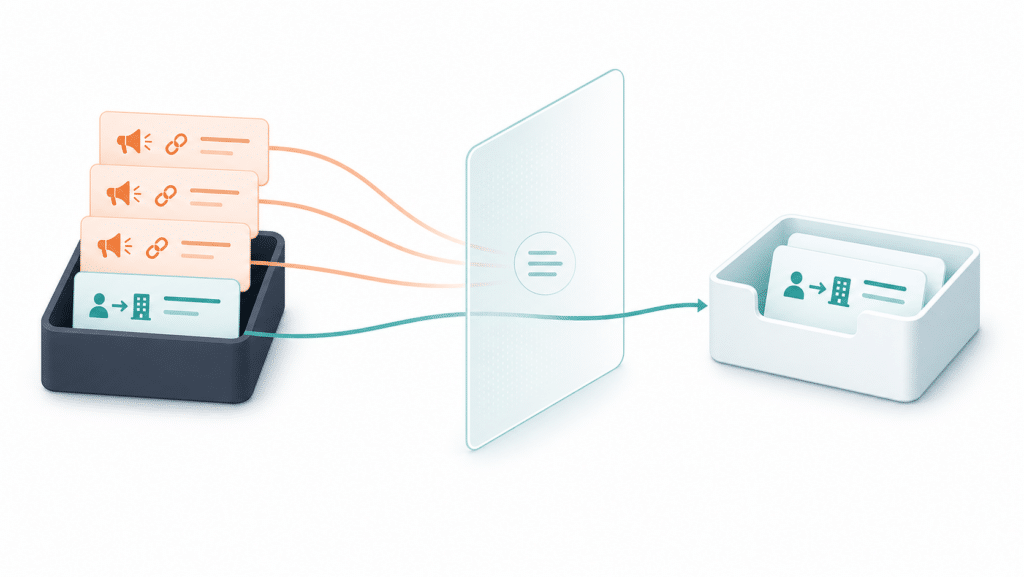
If a spammer learns that a message was blocked, the block becomes feedback.
Change the wording. Rotate the domain. Slow the submission. Try again.
That is why TotalWeb Partners does not turn every spam decision into a visible rejection. We use Sentient Forms Spam Detection to let the visitor finish the form, review the entry behind the scenes, and release only the notifications that deserve a person’s attention.
This is a practical answer to form spam that gets past CAPTCHA because the submission looks superficially human.
Start with the limits of CAPTCHA
CAPTCHA, honeypots, and timing checks still have a place. They catch a large amount of automated noise at low cost.
They do not understand the business purpose of a message. A vague guest-post pitch, fake quote request, or mass sales message may use a real mailbox and natural language. The reverse mistake matters too. A genuine buyer may write only six words, use imperfect grammar, or submit from an unfamiliar country.
The job is not “block anything odd.” The job is “keep unwanted messages away from staff without losing the unusual messages that are real.”
Use a held-delivery workflow
- Gravity Forms accepts the submission and preserves the entry.
- Sentient Forms evaluates the entry against the purpose and context of that form.
- The result records a classification, confidence, justification, and spam indicators.
- Notifications remain on hold while a background decision is pending.
- A legitimate result releases delivery. A spam result enters the configured suppression path.
A classifier that only says “spam” is difficult to improve.
TotalWeb Partners
The sender sees the site’s ordinary completion flow. They do not see the classification or the reason behind it. Gravity Forms notifications and Webhooks are separate systems, so Webhooks controls depend on the relevant add-on and supported replay behavior.
Review the reason, not only the label
Sentient Forms stores a structured result so an operator can see what influenced the decision. That does not make the model infallible. It makes disagreement useful.
When TWP finds a false positive, we can see why a legitimate message looked suspicious. When we find a false negative, we can see what the classifier overlooked. We can then add a representative example or clarify the site’s instructions.
This is calibration, not a claim that we retrained a foundation model. The classifier still needs human review during rollout, and no responsible provider should promise 100 percent accuracy.
Tune for both kinds of error
False negative
Junk reaches the inbox and interrupts staff.
False positive
A real customer, referral, applicant, or urgent request may be held.
The acceptable balance depends on the form. An emergency intake form may need a conservative threshold and a clear review queue. A partner application may benefit from examples of unusual but valid submissions. One site-wide setting is rarely the right answer.
- Begin with a conservative threshold.
- Review held and suspicious entries.
- Label clear misses and bad calls.
- Add a small set of representative examples.
- Recheck after the sender pattern changes.
A 49-day production readback
On one anonymized industrial client’s quote form, Sentient Forms completed 107 structured spam decisions between July 2 and August 20, 2026.
| Measure | Count | What we observed |
|---|---|---|
| Sentient legitimate | 80 | Structured legitimate classifications. |
| Sentient spam or likely spam | 27 | Entries sent into the configured spam path. |
| Gravity Forms native spam | 33 | Entries held by the site’s native spam layers. |
| Overlap | 24 | Entries both systems flagged. |
| Layer disagreement | 12 | Nine held only by another layer and three flagged only by Sentient Forms. |
All 27 Sentient Forms spam or likely-spam results have a classification note. None has a recorded “marked not spam” or restoration event. The production setup uses 11 stored classification-guidance examples.
For the story behind these numbers, read the companion Sentient Forms spam detection case study.
Keep the evidence in WordPress
The filtering decision should not disappear inside an email gateway or unexplained vendor score. Sentient Forms keeps the workflow in WordPress, where the site owner can review the result and action taken.
The Sentient Forms Action Library shows what can happen after a valid submission, including entry summaries, lead scoring, and routing recommendations. You can also add AI review to existing WordPress forms instead of rebuilding the form around the AI layer.
Questions about the workflow
Does the visitor see that the submission was classified?
Not in this quiet workflow. The visitor receives the normal completion experience while the decision remains behind the form.
Are notifications and Webhooks handled the same way?
No. They are separate Gravity Forms systems. Webhook controls require the relevant add-on and supported replay behavior, so TWP checks the downstream path before enabling suppression.
Should every form use the same threshold?
No. A sales form, emergency intake form, and job application form carry different costs when a decision is wrong. The threshold and examples should match the form’s purpose.